

The SAP RE-FX System Health Check for Corporate Real Estate is an independent, structured diagnosis of your system environment, helping you evaluate the status of your IFRS 16 implementation and much more.

Sounds familiar?
Identify unintended deviations before they become the standard
“Month-end closing completes, but I wait to see how many postings failed.”
Once the posting run is done my attention shifts to one question. How many entries did not go through this time. Building 4 is on my desk again. The lease liability moved by tens of thousands. Accounting wants an explanation and I block out two hours to dig through the log. Sometimes the cause surfaces. Sometimes I close the ticket with a note to revisit it after the next cycle. The cycle after that brings a different building and the same conversation.
Then there are the failures that have nothing to do with how SAP runs today. A migration nobody signed off after the fact. A reorganisation that pushed contracts into a different company code without cleaning up behind it. A legal change rolled out under deadline pressure and never revisited once the deadline had passed. None of this shows up as a defect in the system. What it leaves behind is residue. Tiny mismatches that build up out of sight until a number on a report refuses to match its source.
Identify unintended deviations before they become the standard
“Is this a deviation, or is this how it’s supposed to work?”
The lease liability fluctuates by a few hundred euros from month to month. I have never been able to verify whether this is normal under IFRS 16 or whether something in the configuration has drifted without anyone noticing. A forum contributor once pointed me to an SAP Note. We implemented it. The fluctuations continued. I did not pursue it further. Several configuration elements pre-date my tenure. They have never been changed. They appear to work.
One custom condition type posts to a dedicated account every month. The account clears in reconciliation. I have never investigated what it actually does.
When auditors ask whether the figure is complete and accurate I say “yes” with conviction. But here is the question I cannot answer. I can confirm the figure is produced in the same way as last year. I cannot confirm that consistency is the same as accuracy.
Identify unintended deviations before they become the standard
“I have stopped asking and I have built my workarounds to handle it.”
Corporate Real Estate-typical IFRS 16 was implemented properly. External consultants configured the rules ran the transition and posted the opening balance. The auditor signed off the first year-end. That was the moment the system became mine.
Then things started to drift. Postings that ran clean for three years suddenly throwing AA594. Contract modifications producing depreciation differences nobody can explain. I run the monthly valuation I post the entries I file the disclosure. But more and more of my time goes into working around things that used to just work. The consultants left documentation that describes what was built. Not why and not whether it still fits today.
Every quarter the auditor asks whether the figure is complete and accurate. I say yes with conviction. What I can actually confirm is narrower. The figure is produced in the same way as last quarter minus a few workarounds I have added along the way. Whether that is the same as accuracy I do not know. Admitting that would mean opening a door I cannot close again. So as long as the numbers do not look obviously absurd they are good enough.
“We need to find out where we actually stand.“
Identify unintended deviations before they become the standard
The product
System Health Check
- NDA, read-access, and we begin. Ten days to the report.
- A 2–5 page report in English, German, or French
- At a price small enough not to need procurement’s approval.

Identify unintended deviations before they become the standard

“we recognize ourselves in the questions.”
(book the ticket: credit card + VAT required)
Identify unintended deviations before they become the standard
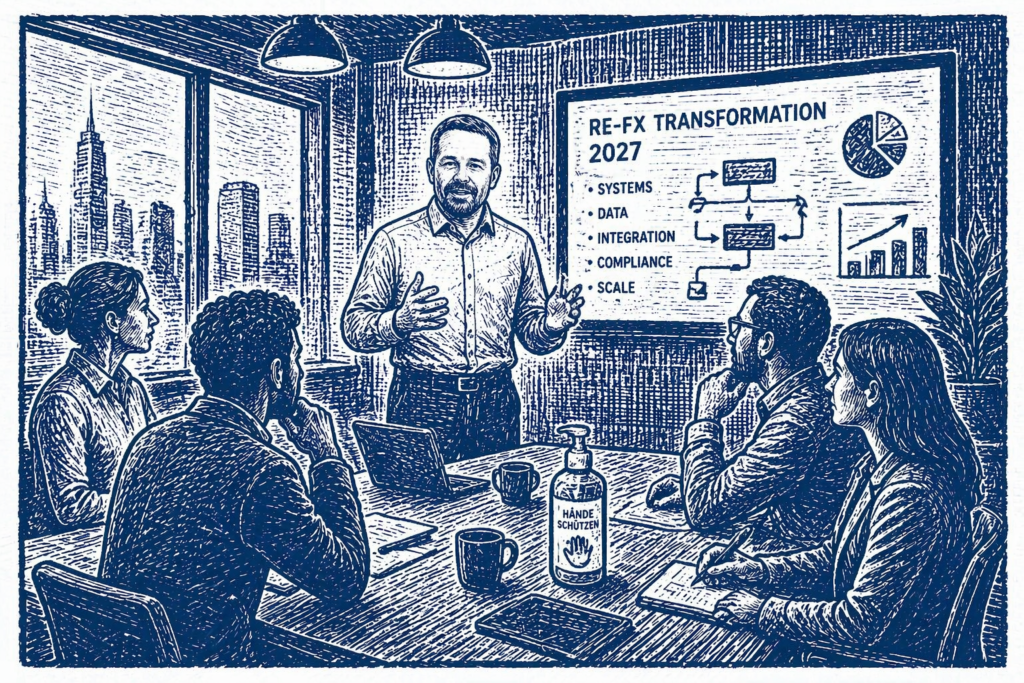
“we want to clarify some point before we start.”
(book a 25 min. online session – free)
Identify unintended deviations before they become the standard

“we need more information first. “
(Click the link to read the FAQ, which may require registration.)
For corporate real estate companies & Infrastructure organisations.