
Frequently asked questions (FAQ)


Key aspects of the Knowledge Retention
Who is this for?
Knowledge Transfer is for organisations where a key person — internal or external — holds operational knowledge that has not been written down, and where that person is leaving, will be leaving, or where the concentration of knowledge in one or two heads has begun to look like institutional risk. The buyer is typically the decision-maker who carries the consequence of the gap: department head, programme owner, or IT lead. Both Operator and System Integrator tracks are eligible.
Key aspects of the Knowledge Retention
How does the model work in practice?
The programme runs as a sequence of moderated sessions, depending on role complexity and how much knowledge needs to be captured. Cadence is weekly or bi-weekly, or expanded to monthly, depending on the situation. Each session combines structured interviews with written synthesis — the conversation is not the product, the document is. The configuration at the start determines the focus: completed transfer to a named successor, preservation of knowledge into a dossier without a specific successor, or system-based extraction when cooperation is limited.
Key aspects of the Knowledge Retention
What does a session look like?
A session is typically forty to ninety minutes of structured interview, followed by written synthesis we produce afterwards and deliver before the next session. With a named successor, sessions alternate between leaver-focused interviews and joint sessions where the successor’s gaps drive the agenda. Without a successor, sessions concentrate on the leaver and on system documentation. Topics are sequenced so that operationally critical areas are captured first, before optional areas. Each session ends with a defined output added to the dossier.
Key aspects of the Knowledge Retention
What does it cost and how do I pay?
€230 per two-hour session, fixed, exclusive of VAT where applicable. The price is set deliberately below the threshold at which most organisations require formal procurement involvement, so initial sessions can be commissioned without internal process overhead. Payment is by credit card at booking. You commit one session at a time after the initial minimum; there is no upfront programme fee.
Key aspects of the Knowledge Retention
Do I need to register?
Yes. Knowledge Transfer is available only after a short verification step that confirms your organisational context. Registration places you in the correct track and clarifies the framework before the first session.
Key aspects of the Knowledge Retention
What does the final dossier contain?
Composition is set at the start of the programme based on what you need afterwards. Two common configurations: a topic-focused dossier that goes deep on specific areas — typical for SAP RE-FX engagements, where conditions, contract clusters, settlement variants, or specific integrations to FI-AA or IS-U get full treatment — or a system-overview dossier with structured coverage across all relevant SAP objects, with a minimum of three pages per object. The two can be combined. Each section follows the same internal structure: what the object does in your specific configuration, why specific choices were made, known workarounds, edge cases, and operational warnings for the successor. The dossier is your property; we retain only anonymised methodological learnings.
Key aspects of the Knowledge Retention
What is not included?
Knowledge Transfer is not coaching, not system training, and not a substitute for the line-organisation handover that HR coordinates. We do not negotiate with the leaver on terms, performance reviews, or compensation. We do not act as mediator in interpersonal conflicts between leaver and successor. We do not produce certifications or qualifications for the successor — the dossier is a working reference, not a credential.
Key aspects of the Knowledge Retention
What if the leaver does not cooperate?
Cooperation is the default, but resistance occurs — especially when the departure is contentious or the leaver feels under-appreciated. In that case, the format adapts: we move to direct system access and conduct the extraction without depending on the leaver’s voluntary participation. We work through the system, identify gaps, and send targeted questions back to the leaver in writing. Most people prefer being interviewed about their work to having someone walk through their decisions on the system, since the latter exposes choices more directly than a conversation does. Cooperation usually returns once that becomes apparent.
Key aspects of the Knowledge Retention
Is artificial intelligence used in the work?
Limited to linguistic refinement and translation. AI runs as a final readability filter on the dossier so each section reaches you in the clearest possible form, and it produces the non-English language versions if required. The substantive work — what is asked, what is captured, what is included — is human.
Key aspects of the Knowledge Retention
In what language does this happen?
Spoken in English or German. Written documents available in English, German, Dutch, French, Italian, or Spanish. Non-English versions are high-quality AI translations; the English version is authoritative in case of doubt.
Key aspects of the Knowledge Retention
Can I cancel sessions?
Cancellations are generally possible, but a refund can only be issued for an unstarted booking as a whole, not for individual sessions within it. Place sessions into the cart individually if you want the flexibility to refund single ones. The initial minimum commitment is two sessions; after those have been delivered, each further session is booked individually. Cancellation of an upcoming session up to five working days before the planned date is free of charge; later cancellations incur the full fee.
Key aspects of the Knowledge Retention
When does the programme end?
Programme length depends on cadence. A weekly handover typically runs two to three months. A monthly cadence runs five to ten months depending on role complexity and the depth of the dossier you want at the end. Final delivery is a consolidated dossier with an executive summary, organised so the next person in the role can use it as a reference rather than as a story to read once.
Key aspects of the Knowledge Retention
Why is this format efficient compared to internal handover?
Internal handovers tend to default to whatever the leaver and the successor improvise in the room. Hours are spent, conversations happen, but little is written down in a form that survives the exit. The session-plus-synthesis format imposes a forcing function: each session must produce a documented output added to the dossier, or it has not delivered. Moderation from outside removes the social pressure that prevents the successor from asking obvious questions and the leaver from admitting gaps in their own knowledge.
Key aspects of the Knowledge Retention
How much can I save?
The saving is indirect, in two forms. First, in productivity after the exit: a successor with a working dossier reaches operational fluency in weeks rather than months, which translates into earlier delivery of whatever the role is responsible for. Second, in avoided costs of post-exit consulting: when the leaver is gone and a critical question arises, the alternative is to hire them back on consultancy terms or to commission a fresh discovery engagement. A dossier built during the structured handover removes most of that need. The saving is in what does not happen — the failed migration, the audit finding, the project restart after the new person reconstructs context the old person could have transferred.
Key aspects of the Knowledge Retention
Who is the contracting entity?
Metaneering S.à r.l., Luxembourg (RCS B275944). Two parties: you and us. No agency. No margin layer. CSDDD and LkSG compliant.


“we recognize ourselves in the questions.”
(book the ticket: credit card + VAT required)

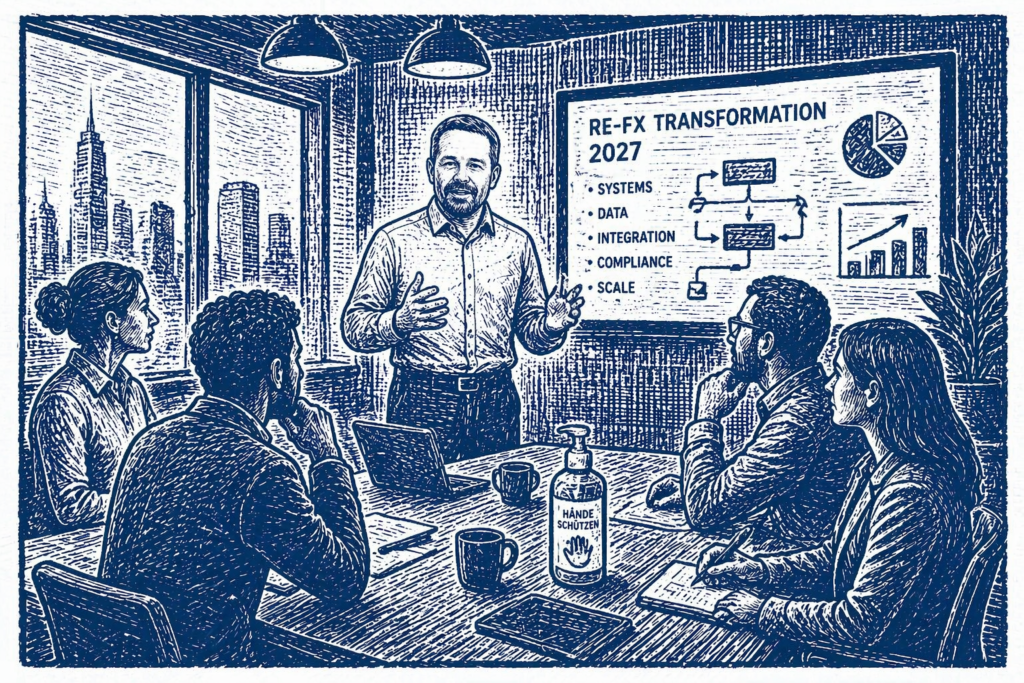
“we want to clarify some point before we start.”
(book a 25 min. online session – free)
For real estate companies — housing associations, commercial operators, cooperatives